If you are an academic, businessperson, or student, outsourcing your proofreading to specialists in professional proofreading is a great way to save time. Professional proofreading services give you the chance to benefit from the expertise of people who have significantly more training in this area then you are likely to have.
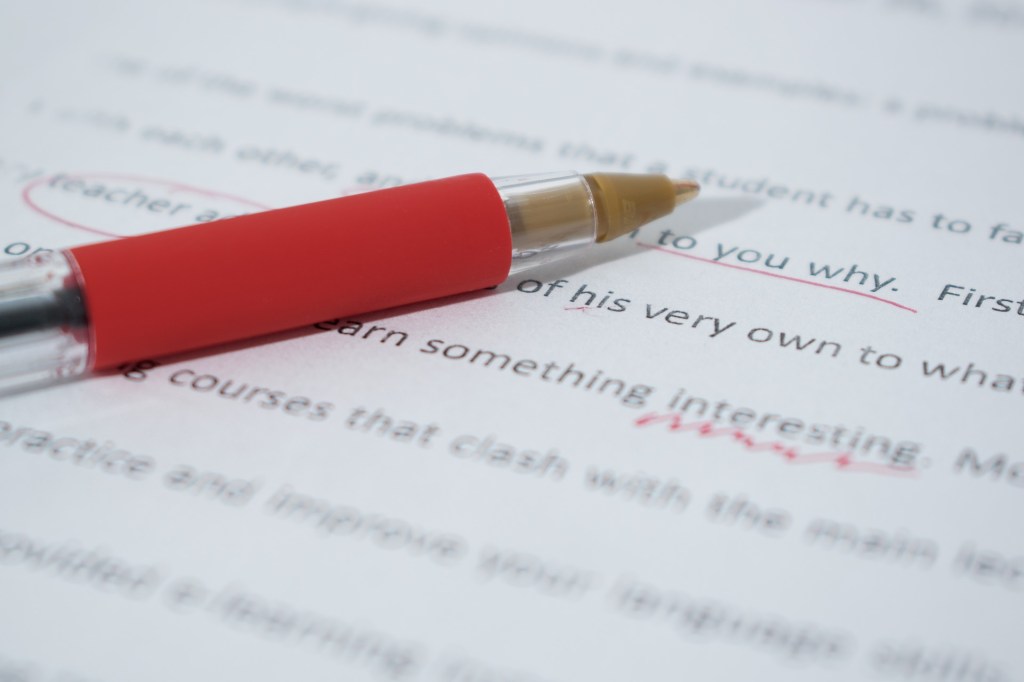
However, if you can’t afford professional proofreading services, or if – similar to the people who cut their own hair – you just like to do things yourself, it’s important to know about the different techniques used in professional proofreading. If you learn to use these techniques effectively, you can become a better proofreader and help in correctly checking your own work.
1. Give yourself time
Letting time pass once you have finished writing and editing your document, and before you begin the proofreading process, is a tried and tested way to increase your effectiveness as a proofreader. This is because, when you have a high level of familiarity with the way your document sounds and is written, your brain is likely to skip over subtle or hard-to-spot errors. For this reason, giving yourself time is one of the key ways to become a better proofreader.
2. Begin at the end
A common technique used by expert proofreaders is to start at the end of your document and to read backwards, sentence by sentence. Similar to the first tip mentioned in this article, this technique undoes the familiarity that you will have built up with your document. As a result, reading each sentence in isolation by beginning at the end is one of the most reliable ways to catch the errors you are likely to miss due to your familiarity with the text.
3. Get a hardcopy
Using a computer to read a document shines a strong light in your eyes that can undermine your attempt to carefully check over your work. Printing out a hardcopy of your document and proofreading it on paper will lead to a dramatic increase in your efficiency and effectiveness, allowing you to become a much better proofreader.
4. Change the font
Whether you are proofreading on paper or using a computer screen, increasing your font size or changing the typeface you are using almost always increases your effectiveness. In the proofreading community, fonts like Candara, Calibri, and Papyrus are well-known as substantial aids to proofreading strength. At the same time, using a font size of around 18 points magnifies everything, including errors, which makes them significantly easier to identify.
5. Identify common errors
If you check your own work after writing and editing it, one of the most reliable ways to do so more effectively involves compiling a list of the common typographical or grammar errors that you make. Once you’ve built up a list of this kind, keep it beside you when you are proofreading your work, and remember to do a specific check for all common errors. For example, if you know that you often use contractions in academic writing (which, for the record, is a bad idea), you can pay special attention to this issue when proofreading.
 Professional Proofreading Services