Self-Proofreading Tips to Improve Your Work

Self-proofreading refers to the process of improving your own written work through the correction of errors, the revision of structure, and the refinement of word choice. Self-proofreading contrasts with the now widespread practice of using proofreading services.

Image: Self-proofreading is when you check over your own written work

The purpose of a proofreading service is to find and fix every typographical mistake that a document contains. If you’re proofreading your own work, it may be unfamiliar to you that professional proofreaders use dedicated checklists to ensure they work to a high standard.

In a typical professional proofreading checklist, which it is strongly recommended that you use, the following issues are focused on:

  • Removing unnecessary words
  • Spelling and grammar
  • Improving clarity
  • Minimising jargon
  • Avoiding repetition
  • Avoiding long sentences
  • Formatting

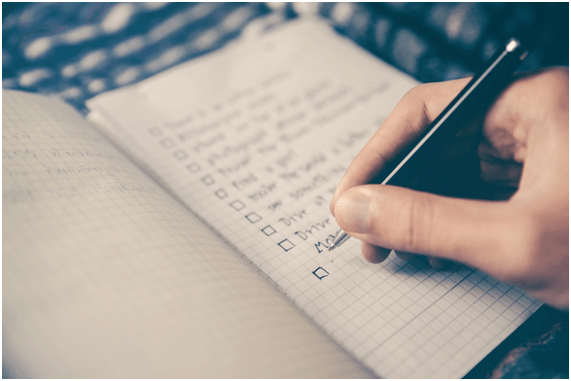
When you self-proofread your writing, it is crucial to pay close attention to each of the above areas before considering your manuscript complete.

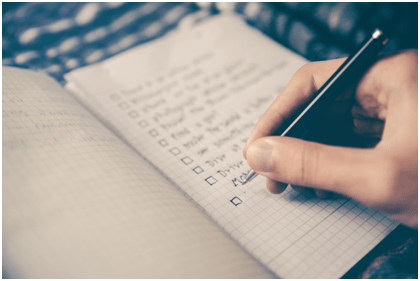
Image: Following a proofreading checklist can massively improve your writing
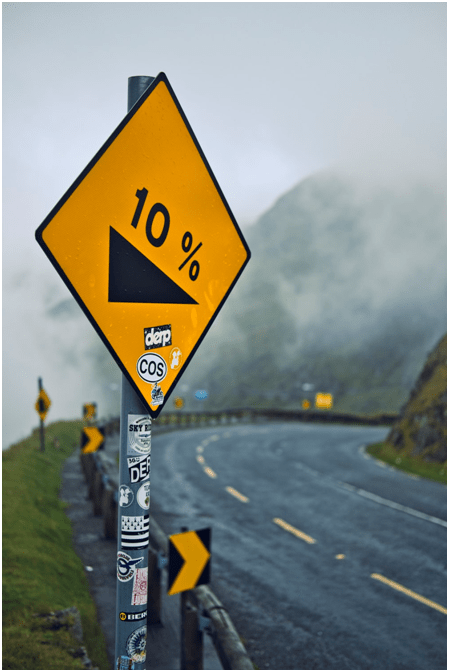
In a professional proofreading service, proofreaders typically follow the 10% rule. Often attributed to the author Stephen King, who wrote about the 10% rule in his book On Writing, the rule states that a first draft can always be cut down in length by 10% without losing any significant meaning.

For example, if your manuscript is 10,000 words long, Stephen King’s 10% rule would suggest that 1,000 of these words can be cut somehow (in this case, through proofreading).

On the basis of the 10% rule, it is always worth trying to maximise the concision of your written work when you engage in self-proofreading. If you can’t pay for professional proofreading services, this is certainly the next best thing.

Image: Stephen King’s 10% rule helps you to avoid wordiness in your writing
Another important tip that professionals follow when proofreading, and which you also should try, is to keep your audience in mind – ideally all the time. Writing should always be tailored to the intended audience, which we immediately see when considering the differences between a university essay and an email intended for a colleague.

To help you write most effectively for your target reader, you should ask yourself the following questions:

  • Is this written in a way that my reader can understand?
  • What would my reader think of this phrase or sentence?
  • Are there other suitable phrasings?

One trick that writers often use is to imagine a person that they know well who can serve as a stand-in the general audience. This helps them to visualise their audience and eases the writing and proofreading process.


What to Look for in an Editor

Of all the choices of editors and proofreaders out there today, you want to work with the top 1% – ideally. Your search for an editor needs to lead you to the most qualified professional, no matter the type of editing service you are interested in – for example, copy editing, developmental editing, an editorial assessment, or a straightforward final round of proofreading.

Importantly, to ensure you can find an editor who is in the top 1% of professionals qualified for your project, you need to know something about the type of editing and proofreading services you require, along with details such as your budget, deadline, and intended communication style. Without this information, it will be difficult to explain to the editor what you are looking for, and you run the risk of being dissatisfied.

Image: Finding an editor for your project doesn’t have to be guesswork

First things first, you should exclude any editing service providers who:

  • Exceed your budget
  • Cannot meet your required completion date
  • Are inexperienced in your subject area (e.g., for a geology paper, an editor with knowledge of the field is desirable)
  • Do not have a communication style that aligns with yours

After excluding all available editing services that failed to meet these criteria, it is important to recognise that the remaining service providers should still be screened for eligibility.

In particular, even if a professional editor is qualified, can meet your deadline and budget, and has a communication style that you enjoy, it is still worth considering a few other issues before hiring them.

 These include:

  • Free sample: You should aim to review a free sample of the editor’s work before hiring them. Without seeing evidence of high-quality work, it is risky to leave a large document with an unvetted freelancer or service provider.
  • Language:A large number of proofreaders and editors work online and internationally. An important factor to consider when hiring an editor is whether they are a native speaker of your intended language.
  • Specialism:If you can find an editor who is a specialist in your area of study or your genre of writing, this may be of considerable value throughout the editing process. This is because they can bring this experience to bear on their revisions to your work.

Image:If you know what to look for, you can often find a much better editor

Once you’ve found an editor who you think is potentially a good fit for your project, what are you waiting for? As this article has shown, choosing an editor isn’t guesswork, and you have ample opportunity to ensure you pick the winning team for your document without wasting money.

What Should I Look for in a Proofreader?

Proofreaders, editors, and writers do not need to have specific qualifications in most countries worldwide. So how can you ensure that the proofreading and editing services you are receiving are genuinely the best?

Indeed, according to UCAS in the United Kingdom, it is not necessary for proofreaders to have any qualifications other than GCSEs (a qualification typically earned at 15-16 years of age) to provide proofreading and editing to clients.

However, looking for a proofreader and finding a strong candidate for your project should not be a matter of guesswork. This is because, despite the fact that proofreaders do not need to have specific certificates or technical forms of training, there are always reliable ways to determine whether a given proofreader or editor is suitable for a project.

To choose the best possible proofreader to work with, consider the following areas – and you will be well on your way to an excellent piece of writing:

  • Specialism:The proofreader should ideally be familiar with the subject area but they should primarily be a specialist in the English language.
  • Word-of-mouth: Seeking out the recommendations of others about specific proofreaders is a valuable way to find affordable and high-quality services.
  • Language: If you can, it is worthwhile to try to speak to your editor or proofreader to ensure that they speak your desired language as their first language.
  • Sample: All experienced editors will offer a sample edit free of charge or for a negligible amount. Therefore, before you commit to an editor or proofreader, you should try out their service to see their communication style and general approach.
  • Price: Currently, there is great variety in the rates that freelance proofreaders and proofreading companies charge. Paying the most doesn’t always equate to getting the best proofreader, but the cheapest companies could lead to a minimal return on investment.
  • Reviews: If you are looking for a service provider online, it is valuable to look at review aggregation websites such as Trustpilot and Google.
  • Type: The type of proofreader – in terms of whether they are a proofreader for books, journal articles, student papers, or PhD theses – should also be considered.

Now that you know what to look for in a proofreader, it’s worth mentioning how to exploit word-of-mouth and where to find it in relation to proofreading and editing. The main sources of word-of-mouth are friends, social media groups, book sales pages, writing website forums, and authors.

For example, given that almost every published book has both an author and editor, you can use Google to find out the details of an editor whose work you like. J. K. Rowling’s editor might be a little bit out of your price range for a journal article, but for a lesser-known author and editor, this can be an excellent way to find a reliable proofreader or editor.

The Value of Careful Proofreading

Proofreading involves carefully checking your written work to identify and correct any spelling, grammar, and punctuation mistakes. When you proofread your work, whether by using a professional proofreading service or by proofreading your document yourself, this reflects the fact that you are serious about your writing and that you take pride in what you publish.

Proofreading services
Photo by Teona Swift on Pexels.com

Using proofreading services is also always an excellent idea because it gives you a competitive advantage, especially if you are submitting a book for publication, publishing a journal article, or pushing any updated business content to your website. When you use proofreading services to finalise your written work, or if you check over your work yourself effectively, you can benefit from improvements in a bunch of important areas.

Some of these benefits of careful proofreading were mentioned already in our opening sentence:

  • Corrections for grammatical and typographical errors
  • Comments to offer suggestions for unclear passages
  • Advice on how to fix wider aspects of your writing, such as flow of paragraphs or structure
  • Consistency in formatting, punctuation, and layout

With these benefits in mind, it’s worth noting at this point that the focus of each individual proofreader or proofreading company may differ. For this reason, depending on the professional proofreading service you work with, it is entirely possible that they may focus narrowly on one area and not others.

As a case in point, some freelancers or service providers only address grammar, spelling, and punctuation errors, whereas other proofreaders cover this along with revisions concerning more advanced issues.

One of the clearest areas where the value of careful proofreading is visible is in academic writing. In a university setting, mark schemes often allocate marks for the quality of the language used in a manuscript. That is to say, if the quality of your written English is poor, you risk losing marks, which could affect your overall grades.

Since proofreading can have a direct effect on improving your grades at university, there is no excuse at all for avoiding it. To ensure that proofreading is done carefully and correctly if you choose to hire a professional, which will lead to a positive experience and a good outcome, it is important to consider the following criteria:

  • Ensure your budget is met
  • Confirm your proofreader can meet your deadline
  • Check whether your proofreader’s qualifications are satisfactory (e.g., relevant experience and expertise)
  • Receive a free sample to check the proofreader’s quality and communication style

Taken together, if you hire a proofreader and consider these criteria, you are very likely to receive a high-quality service, and in this way benefit from the enormous value of careful proofreading. Whether you are an academic, student, an author, or a business, the value of careful proofreading for you will be similarly enormous regardless of whether you proofread yourself or hire a professional.

The Role of Proofreading in Business

In the workforce, imperfections and mistakes convey a sense of carelessness, and this is especially the case for written documents. For this reason, using proofreading services to polish your webpages, press releases, and blog posts before you publish them – ensuring they are free from errors – is becoming increasingly popular and essential nowadays.

Proofreading services
Photo by Karolina Grabowska on Pexels.com

Whenever you use a proofreading service to finalise your business documents before publication, you can ensure that even the smallest mistakes won’t detract from the overall impression of your written work. Whether you are writing a short email or a long financial report, your reputation and market position is at stake, meaning that it pays off to be precise, concise, and correct in your written communications.

Putting your point across to your customer in the best and clearest possible way is essential. At the same time, your communications need to be smart and concise when you reach out to key stakeholders and business partners. Everything your business partners receive from you should be credible, trustworthy, and consistent, and so it’s truly vital to prioritise high-quality proofreading.

An important aspect of the role of proofreading in business, which further stresses the importance of using proofreading services, is its value in bolstering your organisation’s brand and reputation. All of your business communications – ranging from your webpages to your infographics to the text on your product’s packaging – have an influence on a consumer’s response to your offering, which affects your bottom line. If you don’t communicate succinctly, clearly, and flawlessly, the credibility and professionalism of your businesses may be undermined.

For most small and medium-sized businesses, the best way to use a proofreading service today is to work with a freelancer or a company that has a network of proofreaders and editors. Larger companies such as international corporations usually have in-house teams of writers, editors, and professional proofreaders, whereas it is common for smaller businesses to outsource this function.

Especially in today’s increasingly competitive market environment, optimising written content can lead to a competitive advantage. If you contact a proofreading company that operates a reasonably large network of writers, editors, and proofreaders, you can receive assistance on documents ranging from web copy to technical manuals to quarterly reports. In effect, if you find a business proofreader, you can improve any written work that someone in your firm may have produced.

In summary, the role of proofreading in business spans many areas and leads to diverse benefits. These include ensuring succinct and flawless marketing materials, refining external and internal communication, and improving the overall appearance of the business. Working with a professional can save you time and lead to a reasonable return on investment. 

Why Proofread Your Work?

If you want your short story to be safe from being thrown out instantly by a publisher, or if you want your CV to be seriously considered for your next dream job, you really need to pay close attention to the proofreading process. Professional proofreading, if you can find somebody to work with, is well worth investing in, and there are many professional proofreading services available online today. For these reasons, there is absolutely no excuse for overlooking the critical practice of proofreading.

To be more specific about why you should proofread your work – or, alternatively, why you should use professional proofreading services to check your work – it is worth briefly considering the dangers of failing to proofread. If you are writing a blog, for example, publishing an article that contains numerous errors can undermine your credibility and prevent your readers from understanding the intended message. As another example, proofreading is particularly crucial for academic works such as textbooks, journal articles, and even study essays. When these types of documents contain noticeable and avoidable errors, readers are rarely appreciative.

Image: Failing to proofread your work can be hazardous

There are also positive reasons why you should seek out professional proofreading for your next document. First of all, good proofreaders can quickly and effectively – and also for an affordable price – improve the quality of your writing and your ability to convey your point. This means that you do not have to gamble with your reputation as a business, academic, or student; you can simply have an experienced professional check your work and benefit instantly from that.

Another positive reason why you should proofread your work relates to the importance of completely eliminating the risk of publishing embarrassing or potentially damaging information. For example, consider a firm that is seeking to promote its reputation by publishing an annual sustainability report. If the executive summary in this report is signed by, for example, the firm’s “Director of Pubic Affairs”, this would be corrosive to the original aim of improving – rather than diminishing – the company’s reputation.

Image: Proofreading can save you from becoming a laughing stock

All in all, most users of high-quality proofreading or editing services find that working with professionals is worth the time and money. Proofreading adds clarity to your message, ensuring that your words have the final polish they need. When proofreading is done well, it frees you up to focus on the tasks that you excel in, whether those are business-related, research-related, or centered around studying. However, given that proofreading is a specialised skill that requires extensive time and experience to master, consider working with a professional rather than trying to proofread your work yourself.

Whatever you decide always get somebody else to check out your work, let them read it aloud, so you both listen to the flow and meaning of your work, this should give you a better sense of understanding about it.

Why Choose an Editor Over a Proofreader?

Editing services are becoming increasingly popular today, especially with the realisation among many businesses of the criticality of high-quality content in promoting their visibility and reputation. However, the question of when an editing service should be used as opposed to, for example, a proofreading service or paraphrasing service is a complex one. Therefore, this article discusses the differences between proofreading and editing, followed by an assessment of the question of when you should choose an editor over a proofreader.

What is the difference between proofreading and editing?

Simply put, editing is a more thorough version of proofreading. In the case of proofreading, a proofreader’s main job is to check your document word by word to ensure that there are no spelling, grammar, or punctuation errors. As such, proofreading services are typically used only when the final draft of the document has been completed.

By contrast, editing services are richer and more diverse compared to proofreading services. Most editors pay attention to clarity, concision, redundant expressions, structure, layout, style, coherence, and unity. Depending on your editor’s level of experience, as well as the brief you have asked them to follow, they may not focus on some of these areas in their service.

When to choose an editor

To give you a sense of when to choose an editor over a proofreader, some typical editing tasks have been presented below. Please note that this advice applies generically for all types of documents; whether you are writing a blog article or an academic essay, our advice about when and why to choose an editor over a proofreader remains the same.

  • Increase clarity and concision by avoiding unnecessary words and phrases
  • Ensure your writing conforms to a style guide (whether an in-house style guide or one disseminated by an institution such as Associated Press)
  • If necessary, rewrite sections and paragraphs to improve the communication of your ideas, arguments, or factual information
  • Revise the structure of your document to ensure it flows logically and coherently
  • Explain or remove jargon or unusual language

When to choose a proofreader

If you do not need any of the above mentioned tasks to be completed for your document, then it is unlikely that you will need to work with an editing professional. Instead, you are likely to need the services of a professional proofreader, which means it is advisable to avoid paying an editor.

If you feel like proofreading may be more suitable for your use case compared to editing, the all-important point to consider is whether your document is already in a finished state.

If there is anything in your document that you feel should be restructured, reorganised, or rewritten, that should all be done before you send the text to a proofreader. This is because if you apply these revisions after the proofreader has finished, you risk introducing new errors into the text.

Why Choose a Paraphraser Over a Proofreader?

Paraphrasing services (also known as “rewriting services”) are among the most popular writing-related services available today. Professional writers in all fields – ranging from medicine to marketing to materials science – are available around the clock to provide high-quality paraphrasing services, which is enabling diverse groups of users (e.g., business people, marketers, and academics) to rollout content with unparalleled quality and speed.

If you are new to the proofreading and paraphrasing space, and if you have never used a writing-related service before, this article will help you to understand the differences between paraphrasing and proofreading. Having explained the main differences, the article will discuss a few different use cases for each service to give you an idea of whether – for your project – you should hire a paraphraser over a proofreader.

The difference between paraphrasing and proofreading

Paraphrasing is the act of expressing a document’s meaning using different words. The document that is to be paraphrased can be any length (e.g., a word, a sentence, a paragraph, a chapter, or even an entire book or article) and it can focus on any topic or field (e.g., a blog post, a press release, or a technical essay). The purpose of a paraphrasing service is to provide high-quality paraphrasing for an affordable price.

In contrast to paraphrasing, proofreading focuses on correcting an existing piece of text rather than transforming it to produce something new. Specifically, a proofreader will catch hard-to-spot mistakes in a document, aiming to revise every spelling, grammar, and punctuation mistake. In certain cases, proofreaders may address structure, style, and tone, but these tasks are usually the purview of editors rather than proofreaders.

Paraphrasing or proofreading?

Having explained the difference between paraphrasing and proofreading in the previous section, you may already have a clear idea about which service you’ll need for your next project.

If not, then let’s consider a few use cases. These will give you an idea of the applications of these two services, hopefully clarifying the one that will best suit the task you have at hand.

First, let’s say that you have plagiarised the work of another author. Specifically, you have copied and pasted excerpts from a Wikipedia article and included them in your journal article. You need to submit your article for peerreview tomorrow morning. Using paraphrasing services for the plagiarised text will enable you to subvert any allegation of plagiarism (i.e., given that, after this service, the plagiarized text will now be expressed using different words).

For the second scenario, consider that you have just finished writing an original work of fiction. You have gone through several stages of drafting, and you are now fully happy with the structure, layout, style, and readability of the document. You want to preserve your authorial voice but you know that the document contains a few errors that you overlooked. At this point, using a proofreading service is the ideal way to proceed. 

What to Expect from your New Proofreader?

Using professional proofreading services comes with countless benefits. For example, making use of professional proofreading provides you with reassurance and peace of mind that your writing will be as great as it can be. As a business, professional proofreading adds value to your content and communications by reducing misunderstandings and improving concision. At the same time, professional proofreading services can save you time and money because you can catch errors earlier and, in this way, avoid expensive reprints.

With all these benefits of proofreading in mind, it is not surprising to learn that the proofreading industry is currently booming. Academics, students, and businesses around the world, especially in countries that do not have English as their official language, are strongly demanding high-quality writing services, including proofreading and editing, to help them ensure their written work is at its best. Nevertheless, despite the benefits of proofreading, hiring a new proofreader can be stressful and difficult.

Image: The proofreading industry is currently undergoing a boom

Given the potential difficulties associated with working with a new proofreader, especially if you are unsure about their level of experience and expertise, it is important to know what to expect from them before you begin your relationship. The purpose of this article, therefore, is to present two checklists of issues that you can use to shape your expectations of what your proofreader should do for you.

As shown below, the first checklist consists of “obvious” checks, which are the basic expectations you should have for your proofreader. These are the tasks that all proofreaders cannot compromise on. The second checklist focuses on “less obvious” checks. These are also the tasks that proofreaders should not compromise on, but they are less obvious from the point of view of the client who reviews and evaluates the service they have received.

Obvious checks

  • Text makes sense by checking it word by word
  • Consistency in spelling, punctuation, capitalization, and hyphenation
  • Consistency in the spelling of names and technical terms
  • Table and figure captions match with the in-text references

Less obvious checks

  • Accuracy of referencing
  • Double spaces between words
  • Consistency in the design, layout, or style of any material (e.g., text or images)
  • Whether to use the serial comma or not
  • Offer recommendations for unclear text

Image: Checklists are essential for quality improvement, even in proofreading and editing

Taken together, the two checklists above can provide you with a clear view of what you should expect from your new proofreader. If the proofreader you have hired performs well in each of these areas, they are certainly a good find and they are worth continuing to collaborate with. If, on the other hand, the proofreader overlooks any of these issues, you can hopefully spot this and ask them to prepare a second draft with the necessary corrections.

Unity and Coherence in Business Writing

Proofreading and editing are two critical tasks that a writer cannot avoid when producing a new document. Today, due to the affordability and broad availability of proofreading and editing services, there is no excuse for avoiding them – even if your deadline is just around the corner.

The task of proofreading is relatively straightforward. In essence, a proofreader – irrespective of the type of document they are working on (e.g., an academic essay, website copy, or marketing materials) – will check the text for spelling, grammar, and punctuation errors. Whenever these types of errors are encountered, the proofreader will correct them.

In contrast to proofreading, editing is a deeper and more focused task. Editors typically take a second look at fundamental aspects of your document, moving, cutting, adding, or changing text as appropriate. The revisions an editor makes focus on improving clarity, accuracy, engagement, or persuasive force, and editors also focus on the style of the document.

If you are looking to improve your business writing and have decided to order proofreading and editing services, then it is important to approach the proofreader or editor with a clear view as to how you would like them to work, as well as what you would like them to focus on. In this article, we will emphasize the importance of ensuring that your editor focuses on two core issues – unity and coherence – in addition to the more basic issues like style, clarity, and readability.

Unity in a document is a product of safeguarding against digressions. That is to say, you can impose a sense of unity on your document – thereby improving the experience of the reader – by reviewing it for a second time (or asking an editor to do so) and removing any instances of digression. It is worthwhile to note that a planned digression does not harm a piece of writing; in fact, detours to provide another perspective on an issue, or to offer more information or context, are helpful for readers, especially when you are writing about a complex or technical topic. By contrast, unplanned digressions typically destroy unity, and so they should be avoided when you edit your work.

Coherence in a document comes from the use of effective transitions between sentences and paragraphs. It is particularly important to pay attention to the question of how these sentences and paragraphs are related and interconnected, which enables coherence to be achieved. By checking over your document and adding transitions, you will not only improve coherence but also will improve the authority and maturity of your tone. Common transitional words and phrases include transitions showing sequence or time (e.g., “First of all”, “Meanwhile”, or “Next”), transitions showing a conclusion (e.g., “In conclusion” or “Therefore”), or transitions continuing a line of thought (e.g., “Additionally” or “Similarly”).

In summary, we strongly recommend that all businesses should not overlook proofreading and editing when producing content. Additionally, in the process of improving a document by working with a professional proofreader or editor, you should ask them to pay close attention to the unity and coherence of your writing.

Design a site like this with WordPress.com
Get started