Proofreading and time management: A quick guide

Proofreading and time management: A quick guide

There are some things money cannot buy in this world, and one of the most famous is time. However, people who have used professional proofreading services understand that, simply by paying someone to provide professional proofreading for their written work, they can effectively buy themselves more time.

What is proofreading?

If you have ever written an extended document before, you will be intimately familiar with what the proofreading process involves. In contrast to editing, which begins after producing the first draft of a document and continues until the draft is finalised, proofreading is performed only on the final draft of a document.

Proofreading, unlike editing, only addresses surface-level issues, including inconsistencies, misspellings, and punctuation and grammatical errors. As such, the purpose of proofreading is to rid a piece of writing that is already of a good standard of errors and inconsistencies. Proofreading, therefore, is a less involved process than editing, but it is nonetheless essential.

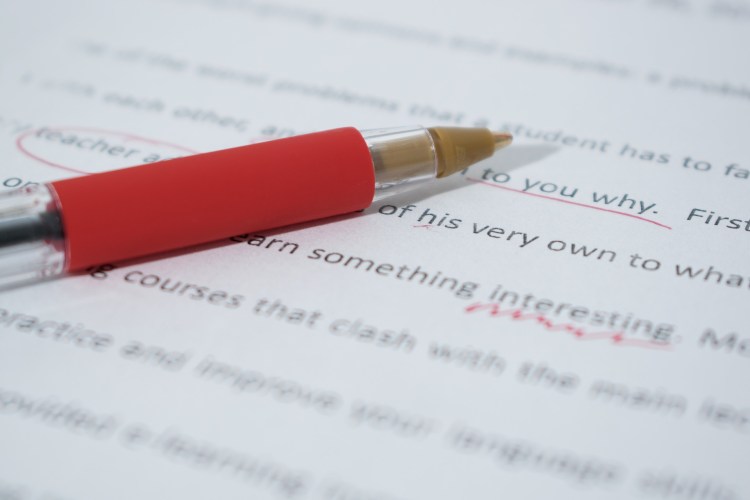
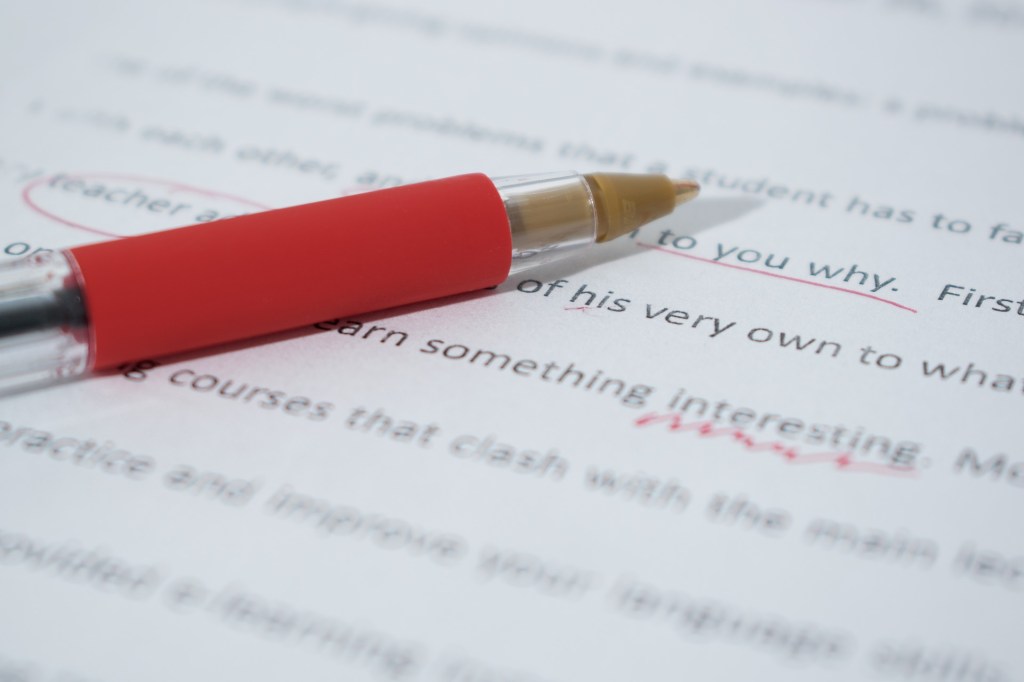
Image: Proofreading is not the same as editing, but both are valuable
Professional proofreading and time management

Hiring the services of a trained professional to proofread your document differs in several important ways from the normal process you might use to check your work before submitting it. First of all, people who provide professional proofreading services are experts with extensive experience, qualifications, and a proven track record. For this reason, their refined ability to proofread written work will lead to a higher-quality outcome overall.

At the same time, perhaps the most fundamental difference between proofreading your work yourself and hiring a professional to do it is the benefits you gain in terms of time management. We all have our own, often distinctive, strategies for managing our time effectively, but when it comes to writing, working with a trained proofreader is something we all should be doing.

The main reason why students, academics, and professionals can all save time if they work with a proofreader relates to the time-consuming nature of the proofreading process. To remove every error from a piece of written work in a reliable and consistent way, significant time and careful attention must be dedicated to the task. Therefore, if you ask a professional to check the final draft of your written document for errors, this is an opportunity to save your valuable time for another task.

Image: See how much time can be saved by working with a proofreader
Pitfalls to avoid

It’s worth emphasizing that working with a proofreader may not always save you time. This is especially true if you have the bad luck of hiring an unqualified person. When this happens, you may need to spend time checking their work, and because of the lack of trust you have in them, you are likely to spend even more time on the proofreading process overall. With this in mind, we strongly recommend doing some research to find a reliable and high-quality proofreader, particularly if you have never used these services before.

Persuasive writing: Why editing and proofreading are essential

Good persuasive writing lies at the heart of the best-written documents, whether these are press releases, product descriptions, works of fiction, academic essays, or even legal judgments. If you are a fiction writer, for example, a fundamental task is to persuade your readers that the events, characters, and the world you are communicating to them are actually worth caring about.

Book proofreading services UK, and – more broadly – editing and proofreading services, can go a long way to improving your document’s ability to persuade readers in different ways. For example, writing your work of fiction in a consistently convincing, compelling, and attractive way will persuade your readers to trust you, to continue progressing through your book, and to view you as an authority.

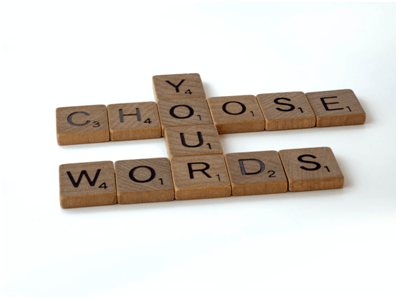
Image: To persuade a reader, words are all you have

In the case of book proofreading services UK, these can greatly improve your ability to produce effective persuasive writing. To write a book persuasively, it is important to know your audience, to support your arguments (or, for works of fiction, your world-building), and to research your topic comprehensively. Therefore, when you work with a professional proofreader, they can provide input on each of these areas and help you improve.

For documents other than books, biographies, and works of fiction, you can consider trying to improve your persuasive writing using editing and proofreading services. For example, if you are a student who has been assigned the task of writing a traditional persuasive essay, your first port of call – that is, after you have finished writing some or all of your document – should be to receive a second opinion. Ideally, you can call on members of your family or your close friends to hear about their suggestions for improvement, but nothing can beat the advice of a professional editor.

Image: Worried your not convincing anyone? Get a second opinion!

It’s worth highlighting the fact that proofreaders and editors, despite both having the potential to improve your persuasive writing, will add different things to your work. This stems from the underlying differences between proofreading services and editing services. In short, the task of an editor is much more comprehensive compared to the task of the proofreader. For this reason, if you want to improve the argument, structure, or content in your persuasive writing, working with an editor is likely to be more worthwhile.

Benefits certainly arise when you leveraged the expertise of proofreaders or editors to improve your persuasive writing. However, before you use these services, it is always important to ensure that the professional you work with is reliable and trustworthy. Furthermore, we strongly recommend collaborating as closely as you can with the person you hire to ensure the best results, always ask for a sample of their approved work before committing yourself to hire any provider.

How do proofreaders really add value to your work?

If you have never used a proofreading service before, you might be wondering why so many people are hiring professional proofreaders today. Proofreading services have long been used by academics, professionals, and students, but for those who have never come across them, it may be unclear how proofreaders really add value to your work.

The purpose of this article, therefore, is to describe the main ways that proofreaders improve your written documents. If you ever end up using a proofreading service, you’ll be in a good position to understand exactly what you are paying for after reading this article. Even if you are uninterested in proofreading services, this article may help you do it effectively yourself.

Human spellchecking

Automated spelling and grammar checkers like Grammarly and the system embedded into Microsoft Word are indispensable, as we all know. However, the best spellchecker in the world – as of 2021 – cannot find even some of the most basic errors. For this reason, using a human rather than an underdeveloped computer system to double-check your use of language, as well as your writing style, is still the best way to improve your documents.

Getting a second opinion

Although a proofreader’s job is simply to address surface-level issues for the final draft of the document, including spelling, grammar, and punctuation mistakes, hiring a professional to perform this service on your writing creates a valuable opportunity to receive a second opinion on your work.

Since hiring a proofreader means that you will have an expert checking over your document, you can use this opportunity to ask them questions about their general thoughts on your writing, your arguments, or your chosen structure. If you are in need of detailed advice in any of these areas, it may be worthwhile to consider a more comprehensive editing service.

Banishing the banal

Whether you are writing a press release, an academic essay, or a journal article, you should force yourself to remove every cliché or idiom from your document. Readers want to see original thoughts and clever, unique phrasing, not canned sentiments. Therefore, if you have any mundane words or over-the-top and conventional similes or metaphors in your writing, a proofreader will be able to spot them and get rid of them in a natural way.

Active versus passive voice

It is extremely common, even among people who speak English as their mother tongue, to write sentences in the passive rather than the active voice. Rarely is this desirable, however, and this is especially the case in academic writing. When you’ve finished the final draft of your document, going back over it and removing all instances of passive voice use can be very tedious. For this reason alone, hiring a professional proofreader is a no-brainer!

Saving time

Perhaps the main area where professional proofreading services really add value to your work relates to the time you save. Many writers are surprised at just how time-consuming the proofreading process is, even for relatively simple and small pieces of writing. Therefore, if you outsource this challenging and lengthy task to a professional, you’ll get it completed more effectively and, most importantly, in good time.

What are the pros and cons of paraphrasing services?

Paraphrasing involves taking a piece of text and using it to create a new piece of text that contains considered identical ideas and theories but expressed in a different way. Paraphrasing services, therefore, allow you to save considerable time when you need to put another author’s ideas into your own words. Using a paraphrasing service can help you avoid plagiarism, understand key texts from a new perspective, or produce documents like literature reviews at an extreme speed.

Today, the main barrier to using paraphrasing services stems from their high cost. Compared to other writing services like proofreading and editing services, the fee you will be asked to pay to work with a professional paraphraser is usually significantly higher. Although the higher price is more than justified by the time-consuming and complex nature of paraphrasing itself, this is a key disadvantage of using a paraphrasing service. 

Knowing this price-related disadvantage, you might be wondering what some of the other notable disadvantages are. The purpose of this article, therefore, is to summarise the main disadvantages associated with hiring a professional paraphraser to work on your documents. At the same time, based on the perspectives of many of the previous users of these services, this article will offer a brief overview of the main advantages.

Image: There are pros and cons to everything

What are the cons?

As with all writing services, the fundamental disadvantage associated with working with a professional paraphraser relates to the possibility of receiving low-quality work. As a matter of fact, this is an unfortunately common complaint today, especially with the growing number of educational and writing companies that have recently been springing up to cater to the swelling demand for paraphrasing and rewriting services.

What is low-quality paraphrasing, though? Well, it can come in a variety of forms. First of all, the paraphraser may unwittingly change the original meaning expressed in the text you submitted for a rewriting service. Additionally, even when the meaning of the original text remains exactly the same in the paraphrased version, it may not be well expressed. For example, in contrast to the clarity and concision of the original version, the paraphrased version may be long-winded, ungainly, or unpleasant to read.

There are a few ways to counter these disadvantages and, in this way, to ensure that you receive the highest quality service possible. The first is to receive a free sample, which will allow you to vet the paraphraser, guaranteeing that they have the necessary skills to complete the task effectively. If it is not possible for you to obtain a sample, nothing beats word-of-mouth. That is to say, if you know somebody, or if you can find a person online, who has been satisfied with their service in the past, working with the same paraphraser is a good idea.

Image: Word of mouth can help you to find the best paraphrasers

What are the pros?

The advantages of using a paraphrasing or rewriting service are numerous. For example, working with a strong paraphraser allows you to express key ideas using original language, thereby avoiding plagiarism and, at the same time, avoiding the need for direct quotation.

Reading over a paraphraser’s work can also expand your knowledge of the topic, and this can serve as a far more effective way to learn new concepts compared to memorisation. Paraphrasing may also help you to conserve your word count or to finish your written work concisely, rapidly and effortlessly.

You’ll be surprised at how much a paraphraser can accelerate the writing process and the increase in kudos your written work may achieve.

Is it considered dishonest to use an editing service?

Since using an editing service is bound to increase the value and mark you receive for an academic essay, some might argue that it is dishonest to take advantage of these services. If this is really the case, then the morality of the millions of students and academics who have leveraged editing services as of January 2021 could be called into question.

Nevertheless, all UK universities, as well as most students, academics, and editors, do not believe that using editing services is unethical or dishonest. It is well-known that higher education relies on a culture of collaboration, and that a person’s decision to work with an editor shows a strong commitment to learning and academic development.

Is it dishonest to use a calculator, even if you have been told by your math teacher or professor that you can? This question is essentially the same as the one that serves as the title for this blog post. It is an interesting question that some people would debate, and some would certainly argue that, even if you can use a calculator, it is slightly dishonest to do so. These people might argue that you should never do so. However, from the standpoint of most people, it is clearly unobjectionable to use a calculator.

An editor, just like a calculator, a computer, or a slide rule, is a tool. Editors are human resources who are available for hire. It would be remarkably silly not to use these human resources if given the opportunity.

Of course, if you use a calculator on a math test where calculators have been expressly forbidden, this is unquestionably cheating. Similarly, if you are a language student learning the basics, or if you are a child learning about grammar in early years education, hiring an editor for your vocabulary test is undoubtedly dishonest.

However, editors – just like Grammarly and other spellcheckers – are intended for writers who have already learned the basics, and who already know how to write. Universities and most academic institutions recognize this (if you are in doubt about this, simply Google your university and attach the term “proofreading policy” or “editing policy”).

Therefore, using an editor for your academic essay or research paper is basically the same as using a calculator for your calculus or number theory exam. As all professional academics and non-fiction and fiction writers recognise, having a fresh pair of eyes check over your written work helps to catch all the things that may be missed when working alone.

When an editor begins to offer answers to an essay prompt, or when an editor starts doing your research for you, this is getting into the realm of dishonesty. But this is not what we’re talking about in an editing and proofreading services intended to convey your ideas in the clearest possible way and  should ensure your work is presentatinally correct for the intended purpose.

How to find the right editor for your book

Writing a book is a labour of love. Since it takes such enormous effort, time, and commitment to finish a book, most authors use editing and proofreading services or, in certain cases, more specialised services such as book proofreading services UK. Nevertheless, even after you have decided to get help from an editor or proofreader, the process of actually finding one can be daunting. Especially if you have not yet identified an editor or proofreader who you trust, finding the best professional to work with as you finalise your manuscript is complex.

Before you begin looking for an editor, it’s worth considering precisely what you would like to work with them for. When you figure this out, the whole process will become significantly easier. This is because most editors, despite all operating under the same name, offer different types and levels of service. A few of these services are content editing, stylistic editing, and copy editing. In none of these services will an editor serve as your co-author, but all of them – in their own way – can help you get a step closer to publication.

Image: There are many types of editing – choose the best one for you, or mix and match

Perhaps the most essential point to bear in mind before you hire an editor is whether you really do need their assistance. If you are an author who is totally happy with everything you have written, and if you feel like all you need is a final check before sending your work off to the publisher (or self-publishing), it is very likely that you do not need an editor. For a final stage of quality control before your book hits the presses, consider using book proofreading services UK. In these services, a professional will simply identify and correct any errors you have overlooked, ranging from grammar errors and punctuation errors to spelling and even formatting errors.

If you’ve determined that you do want to work with an editor, whether for content editing, stylistic editing, or copy editing, there are a couple of things you can do to make your life easier when looking for the best one. First things first, it is always worth working with the book editing company rather than self-employed freelancers. Companies have valuable quality control procedures in place that protect you from low-quality work, whereas if you go with a freelancer, the chances are that you will eventually come across an editor who is unwilling to rectify any errors they have made. A lot of the time, working with a freelance editor will cost you less in terms of money but substantially more in terms of time.

Image: Communicate as closely as you can with your editor

A final strategy for finding the best editor for your book is simply to ask around. If you yourself are an author, you are likely to know other authors, and it is extremely probable that your friends and acquaintances will have used book editing services in the past. Online reviews are a good place to check if you really cannot find personal recommendations, but there is often nothing better than word-of-mouth from a trusted source, and if they have experience in the type of book or journal requiring publication.

The art of paraphrasing: What is it, and how can you improve?

As a university student or an academic, you will know all about the importance of paraphrasing. Rewriting services are available to address any of the paraphrasing tasks you may have, especially the urgent ones, but the art of paraphrasing is still a skill worth developing yourself.

If you can’t access a Proofreading service, or if you would prefer not to use rewriting services, this article will help you in two key ways. First of all, it will explain what paraphrasing (also known as rewriting) is, and it will show how it can help you include ideas from other authors in your writing without plagiarism. In turn, it will discuss some ways you can improve as a paraphraser.

What is paraphrasing?

Paraphrasing refers to the process of expressing information in your own words. University students are often required to paraphrase the work of other authors, which can often be very complex, in order to show that they understand, and also to avoid excessive use of quotation or plagiarism.

Many professionals online today for what they refer to as rewriting services. The purpose of this service is to paraphrase a piece of text for a client, whether for a student, a researcher, or a business person. As noted above, the services can be very convenient, but learning about how you can improve as a paraphraser is worthwhile.

How to improve as a paraphraser?

The first way to improve as a paraphraser is to have a system for doing it. One tried and tested paraphrasing procedure used is the following: read the text you are aiming to paraphrase; look away from the text and write down your impression of what it said; find any synonyms and change them in your new version; change the word order wherever it is similar; compare your new text against the original version to ensure you have not changed the meaning; and finally, reference the source you used.

Once you have a system in place, such as the one described above, there are a few other techniques you can use to become a strong paraphraser. One of the most straightforward is simply to use as many synonyms as you can for each of the words or phrases contained in the text you are paraphrasing. For example, if the text contains the phrase “twentieth century”, you could write “20th century” or “1900s”. Similarly, for words like “asserts”, you can swap these with synonyms (e.g., “maintains”, “argues”, or “claims”).

Changing the class of words in a document is another fairly simple and reliable way to successfully paraphrase it. As a case in point, if you see the word “assume” in a sentence that you are trying to paraphrase, rewrite the sentence such that this word is replaced by the same word of a different class (e.g., “assumption”, “assumed”, or “assuming”). This technique works best when you are having trouble thinking of a synonym for the word.

Becoming a better proofreader: What can you do?

If you are an academic, businessperson, or student, outsourcing your proofreading to specialists in professional proofreading is a great way to save time. Professional proofreading services give you the chance to benefit from the expertise of people who have significantly more training in this area then you are likely to have.

Professional Proofreading

However, if you can’t afford professional proofreading services, or if – similar to the people who cut their own hair – you just like to do things yourself, it’s important to know about the different techniques used in professional proofreading. If you learn to use these techniques effectively, you can become a better proofreader and help in correctly checking your own work.

1. Give yourself time

Letting time pass once you have finished writing and editing your document, and before you begin the proofreading process, is a tried and tested way to increase your effectiveness as a proofreader. This is because, when you have a high level of familiarity with the way your document sounds and is written, your brain is likely to skip over subtle or hard-to-spot errors. For this reason, giving yourself time is one of the key ways to become a better proofreader.

2. Begin at the end

A common technique used by expert proofreaders is to start at the end of your document and to read backwards, sentence by sentence. Similar to the first tip mentioned in this article, this technique undoes the familiarity that you will have built up with your document. As a result, reading each sentence in isolation by beginning at the end is one of the most reliable ways to catch the errors you are likely to miss due to your familiarity with the text.

3. Get a hardcopy

Using a computer to read a document shines a strong light in your eyes that can undermine your attempt to carefully check over your work. Printing out a hardcopy of your document and proofreading it on paper will lead to a dramatic increase in your efficiency and effectiveness, allowing you to become a much better proofreader.

4. Change the font

Whether you are proofreading on paper or using a computer screen, increasing your font size or changing the typeface you are using almost always increases your effectiveness. In the proofreading community, fonts like Candara, Calibri, and Papyrus are well-known as substantial aids to proofreading strength. At the same time, using a font size of around 18 points magnifies everything, including errors, which makes them significantly easier to identify.

5. Identify common errors

If you check your own work after writing and editing it, one of the most reliable ways to do so more effectively involves compiling a list of the common typographical or grammar errors that you make. Once you’ve built up a list of this kind, keep it beside you when you are proofreading your work, and remember to do a specific check for all common errors. For example, if you know that you often use contractions in academic writing (which, for the record, is a bad idea), you can pay special attention to this issue when proofreading.

How to solve writer’s block

We all know that editing and proofreading services are valuable aids to writers, but for conditions like writer’s block, the solution isn’t that simple. Published authors will know that book proofreading services UK can help them tremendously in diverse ways, but – unfortunately – solving writers block isn’t one of them.

Numerous high-quality articles are available online that detail all of the most well-known strategies for overcoming writer’s block as a creative author, and we strongly recommend that you check a few of these out. However, if you are a poet, such articles tend to be less helpful because they are targeted towards writers of prose.

If you’ve lost the ability to create new work as a poet, or if you are experiencing a creative slowdown, you are in good company. Many of the world’s most notable poets which includes Ernest Hemingway (who was best-known for his prose), experienced writer’s block on a regular basis. To help you out, here are two ways to begin solving your condition.

1. Look outside, not inside

If you are staring at a blank page and getting stressed out about it, don’t worry – this is incredibly common. The first thing you need to do to solve this is to generate material. Once you have some written material on the page, (whether good or bad), you can begin manipulating it, developing your ideas, and – over time – shaping it into a new poem.

Looking outside, acknowledging what you see, and simply describing it on a piece of paper is a great way to achieve the above. It works reliably and effortlessly.  For example: “I hear the dog snorting quietly in sleep … I smell the acrid fumes from the glowing logs of fire … The guard light flickers against my windowsill.”

Once you’ve looked outside and filled up your page with a few observations, similar to those mentioned in the previous paragraph, you now have something to work with. At this point, you can ask: Do any phrases stand out? Could any of this inspire a poem? How could these observations and sensory experiences be made more vivid and interesting for a reader?

2. Play around with metaphors and similes

Metaphors and similes are one of the central devices used in all poetry. Readers of poetry often find metaphors and similes impactful or emotionally resonant because they draw a surprising comparison between different things, enabling us to see them in a novel, informative, awe-inspiring way.

To begin playing around with metaphors and similes, create two lists: one consisting of concrete nouns (e.g., “tree”, “house”, and so on) and another of abstract nouns (“truth”, “piety”, and so on). If you can’t think of suitable words, simply choose some randomly from a dictionary or a book.

When you have your two lists, pair up some of the concrete and abstract nouns, and think about how you can use the concrete nouns to create metaphors or similes for the abstract nouns. As a case in point: “Piety is like a house with a solid foundation.” This example shows that all of your ideas won’t be excellent, but this isn’t the point! Creativity is!

How to use editing services to improve your academic writing

Editing services are of interest to academics, researchers, professionals, businesses, authors, and students, amongst others. On the Internet today, companies such as Proofessor.co.uk provide a high-quality editing and proofreading service and are readily available for all document types, ranging from translations to reports, e-books, and admissions essays. For technical or non-technical documents, as well as for researchers, students, and non-academic pieces of writing, these services have proven valuable, and demand for them is growing. In academic writing, in particular, recruiting a professional editor can offer great benefits to your work.

An editor can offer help and advice with technical and non-technical documents, being a strong editor requires a background in general English language editing, paired with a sizeable measure of talent and intuition. For example, the best editors have a “feel” for the intention or meaning of an author, and they understand what appears natural or unnatural on the page. Experienced and qualified editors are available on the Internet today, and many offer long-term opportunities. For this reason, you can use editors to assist with book publishing projects, journal article submissions, and PhD dissertations. At most writing-related service organisations, the difference between proofreading and editing services is that the latter are more comprehensive, though these details may vary from some  providers out there.  

Image: Working long-term with proofreaders and editors improves your academic writing

When an editor looks at your academic document to improve the quality of your writing, they focus on five core areas: (1) informal language, (2) verbosity (i.e., wordiness), (3) biased language, (4) plagiarism, and (5) readability and general editing. Regarding the use of informal language, maintaining an authoritative tone through the use of academic, formal words and phrases is desirable. In terms of wordiness, writing concisely is useful to meet word counts, and to ensure your point is not lost. Avoiding biased language is an ethical imperative, while plagiarism should be avoided to meet minimum requirements for publication or submission in reputable journals and universities. Finally, checks for readability and general editing, as performed in an editing service, are similar to proofreading services

Image: Remember the keys to editing

To further examine the issue of avoiding “informal” language, consider the case of contractions (e.g., “I’m” rather than “I am”). In informal writing, such as an email to a friend, it would be natural to use contractions; however, in academic writing, the appearance of contractions, along with a chatty or impersonal tone (e.g., through the use of personal pronouns or the first person), can lead to the perception of informality. Even when a document – such as a scientific paper – is written in an accurate, precise, and informative way, the use of an unsuitable tone can undermine its credibility and its chances for publication. Focusing on improving your document’s concision, and removing the appearance of slang (or colloquial) language, can also be achieved consistently when using a professional editor.

Design a site like this with WordPress.com
Get started